
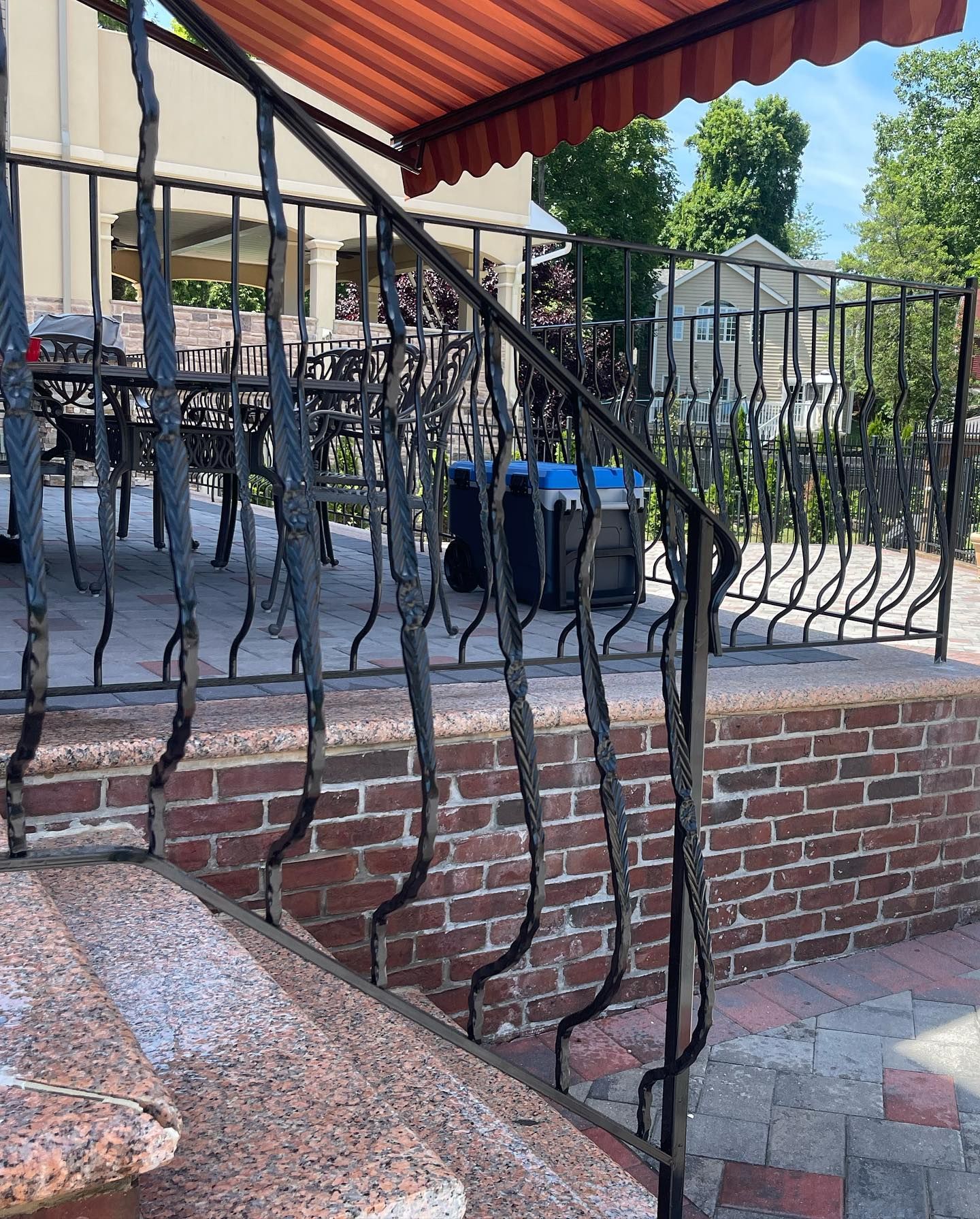
Railings Engineered for Elevated Outdoor Spaces
Balcony Railings in Old Bridge for elevated decks and terraces that require code-compliant metal guardrails
FG Ironworks fabricates and installs balcony railing systems for residential and multi-family properties in Old Bridge, building custom metal guardrails for elevated decks, terraces, and exterior living spaces that combine safety compliance with decorative detailing. You receive railings designed to meet height and load requirements specified by building codes while integrating design elements that match your property's architectural style. Each system is fabricated to the exact dimensions of your balcony or deck, ensuring that posts align with framing members, rails remain level, and infill panels or balusters provide the required spacing to prevent falls.
This service addresses the need for railings that function correctly on elevated surfaces, where structural stability and weather resistance are critical. The fabrication process uses materials engineered to resist corrosion and withstand lateral loads caused by wind or pressure against the railing. Posts are anchored to the deck framing or building structure using through-bolts or welded plates that transfer loads directly to load-bearing members, preventing the railing from pulling away or flexing under force. Finishing includes coatings that protect the metal from moisture, UV exposure, and temperature fluctuations, ensuring that the railing maintains its appearance and structural integrity over time.
If your elevated deck or terrace needs railings that meet code requirements and complement your property's design, reach out to discuss your project and schedule a site evaluation.
What Balcony Railing Installation Includes
You describe the dimensions and configuration of your balcony or deck, and FG Ironworks measures the perimeter, identifies attachment points, and determines post spacing and railing height based on code requirements and the structural capacity of the deck framing. The fabrication process produces metal posts, top and bottom rails, and infill panels or balusters that are cut, welded, and finished before delivery, with each component marked for placement to ensure correct alignment during installation.
After installation, you will notice railings that remain rigid when gripped and do not flex or sway under pressure. Posts are secured using bolts that pass through the deck surface into the framing below, or welded to steel plates that are anchored to concrete or masonry substrates. The top rail is mounted at the required height, typically 36 to 42 inches above the deck surface, and infill balusters or panels are spaced to prevent a 4-inch sphere from passing through, meeting safety standards for residential and multi-family properties. FG Ironworks applies rust-inhibiting primers and finish coats that seal the metal and resist chipping or fading from sunlight and weather.
The installation timeline depends on the size of the balcony and the complexity of the railing design, with straightforward perimeter railings completed more quickly than systems with stairs, landings, or integrated benches. This service does not include structural repairs to the deck itself, waterproofing membranes, or electrical work; it focuses on the fabrication and installation of the railing system.
Common Concerns About Balcony Railings
Property owners often ask how railings are secured to different deck structures and what determines the spacing and height of the railing components.
What height must balcony railings be to meet code?
Residential balcony railings are typically required to be at least 36 inches high, with multi-family and commercial properties often requiring 42 inches, measured from the deck surface to the top of the railing.
How are railing posts attached to wood decks?
Posts are bolted through the deck surface into the rim joists or blocking below using through-bolts and backing plates that distribute the load and prevent the post from pulling out under lateral force.
When is aluminum preferred over iron for balcony railings?
Aluminum is used when weight is a concern or when the deck is exposed to moisture that would accelerate rust, as aluminum does not corrode and requires less maintenance than iron in coastal or humid conditions near Old Bridge.
Why must baluster spacing be limited to 4 inches?
Building codes require spacing of 4 inches or less to prevent small children from slipping through the railing, with this spacing verified during installation using a 4-inch sphere gauge.
How is the railing protected from weather exposure?
The metal is cleaned, primed with corrosion-resistant primer, and finished with exterior-grade paint or powder coating that seals the surface and prevents moisture from reaching the base metal, with periodic inspections recommended to address any chips or scratches.
When your elevated deck or terrace requires railings that meet code requirements and provide long-term stability, contact FG Ironworks to review your project specifications and arrange fabrication and installation.