
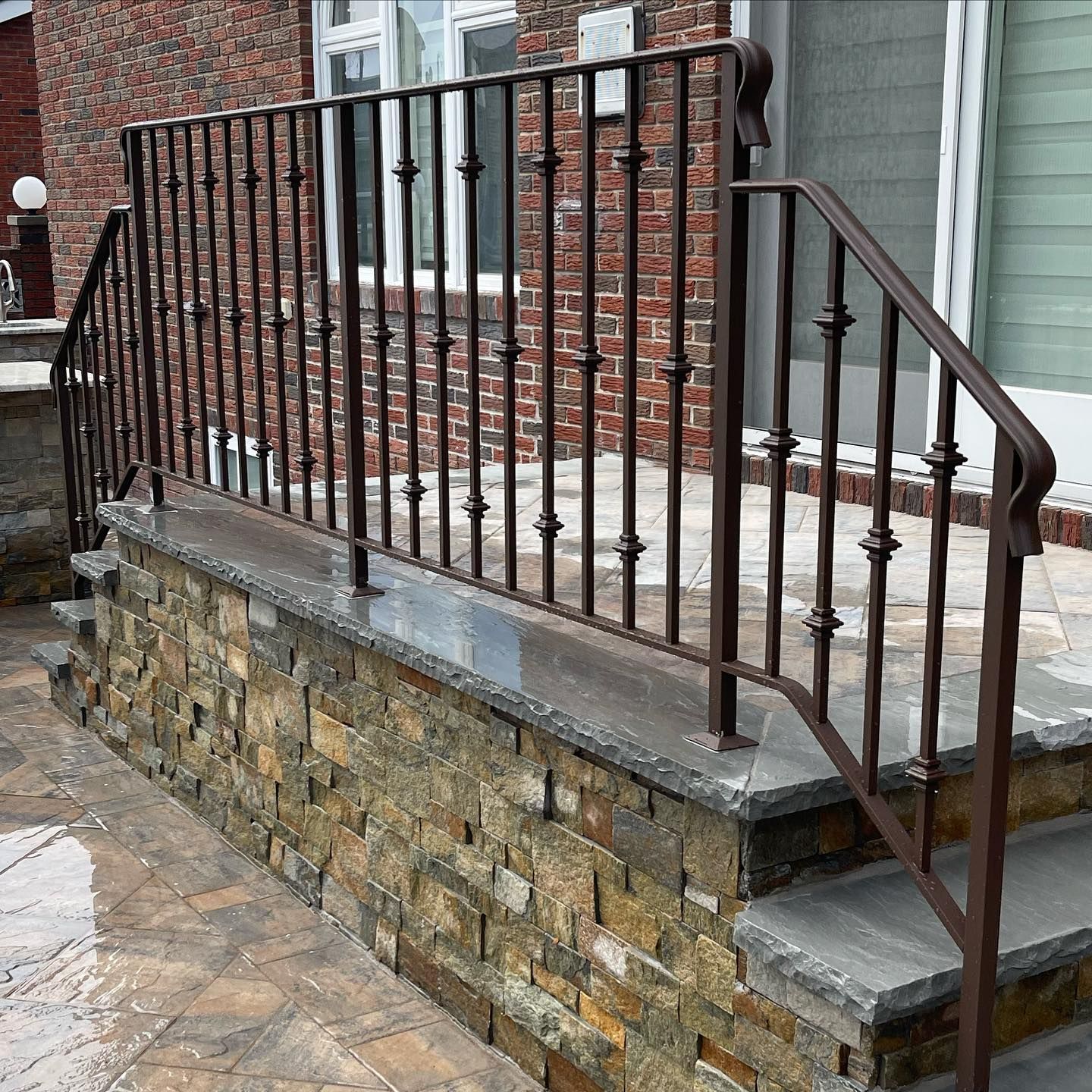
Metalwork That Secures and Defines Your Home
Residential Ironwork in Old Bridge for properties that need railings, fences, or gates with custom sizing and detailing
FG Ironworks provides residential ironwork for homes in Old Bridge, fabricating and installing railings, fences, gates, balcony railings, and decorative metal features that improve safety, privacy, and curb appeal. You work directly with fabricators who measure your property, discuss your design preferences, and build metalwork that fits your home's layout and architectural style. Each installation is custom-fabricated to match the specific dimensions of your staircases, perimeter boundaries, or elevated decks, ensuring that the finished metalwork integrates seamlessly with existing structures and meets your functional requirements.
This service addresses the need for metalwork that functions correctly in your home's unique conditions, whether that involves steep staircases that require precise railing angles, uneven terrain that affects fence post placement, or entryways that need gates wide enough for vehicle access. Iron and aluminum are both used depending on the application, with iron offering greater strength for load-bearing railings and aluminum providing lighter weight and corrosion resistance for perimeter fencing. The fabrication process ensures that posts, rails, and panels are welded or fastened securely, creating systems that remain stable under lateral pressure and repeated use.
If your home needs metalwork that fits specific measurements and design requirements, reach out to discuss your project and arrange an on-site evaluation.
What Residential Metalwork Involves
You describe the areas where you need railings, fencing, or gates, and FG Ironworks takes field measurements to determine post locations, panel widths, and railing heights that comply with building codes and accommodate the site's grade and existing structures. The fabrication process uses cutting, welding, and finishing techniques to produce metal components that match your measurements exactly, with railings drilled and tapped for mounting hardware and fence panels reinforced with horizontal rails that prevent sagging or twisting.
After installation, you will notice railings that remain rigid when gripped and fences that stand vertically without leaning or gapping at corners. Posts are set in concrete footings that extend below the frost line, preventing seasonal movement, and all metal surfaces are coated to resist rust and weathering. FG Ironworks anchors railings to concrete, wood, or masonry using fasteners rated for the substrate, ensuring that the system supports the required load without pulling away or flexing under pressure.
The installation timeline varies based on the project scope, with single railing systems completed more quickly than full perimeter fencing or multi-gate installations. This service does not include landscaping, concrete pouring beyond post footings, or electrical work for automated gate openers; it focuses on the fabrication and installation of the metalwork itself.
Common Questions About Residential Metalwork
Homeowners often ask how metalwork is customized to fit specific properties and what determines the choice between iron and aluminum.
What makes residential ironwork custom rather than prefabricated?
Custom work is fabricated after field measurements are taken, ensuring that railings match your staircase angles, fences follow your property lines, and gates align with your driveway width without gaps or awkward spacing.
How are fence posts secured to prevent movement?
Posts are set in concrete footings that extend at least 36 inches deep in Old Bridge to reach below the frost line, with the concrete cured for several days before panels or rails are attached.
When should aluminum be used instead of iron?
Aluminum is preferable for perimeter fencing in areas with high moisture or salt exposure, as it does not rust and requires less maintenance, though it is less suitable for heavy-duty railings that must support significant weight.
Why do some railings require intermediate posts?
Building codes often specify maximum spacing between railing supports based on the railing height and the load it must withstand, with intermediate posts added to prevent sagging and ensure the railing remains rigid along its entire length.
How is the metalwork finished to match the home's appearance?
You select from paint colors, powder coating finishes, or clear sealants that protect the metal while complementing your home's exterior palette, with textured or smooth finishes available depending on the desired look.
When your home requires metalwork that fits precisely and functions reliably, contact FG Ironworks to discuss your project details and schedule fabrication and installation.